

As I mentioned in part IX, the Estates of Bohemia and Silesia chose a new king, Ferdinand II, on condition that he respect the privileges established for them by Emperor Rudolf II. But this did not happen, as could have been foreseen from his rule in Austria, where, even before his coronation as King of Bohemia and Silesia, he had held power as archduke since 1596. Even then his first move was to withdraw all the privileges of the Protestants. He forced all followers of the new faith to convert or leave the country immediately. This caused great economic disruption in Austria. Regardless of the effects of the economic collapse, Archduke Ferdinand, then still III, consistently pressed on with the Counter-Reformation, following the example of his uncle, King Philip III of Spain, who re-Catholicised his country by every means.
But in June 1617, before his coronation in Prague, he solemnly swore that all the privileges of the Protestants would be preserved. After the coronation he moved his seat of office from Prague to Vienna, and the office of governor was established for Bohemia. On 21 March 1618 a meeting of Protestants was called in Prague (despite the ban of Emperor Matthias). Two days later a delegation of the protesters went to Hradčany castle, where talks were held with the new governors (Martinitz and Slavata and their secretary Fabricius, who represented the emperor in the talks). As no agreement was reached, the protesters threw the emperor's representatives out of the window from a height of 17 m. As later emerged, this “Revolutionary Act” had been planned; it was about political overthrow. This was the start of the long 30-year war of religion, which proved terrible for the whole of Europe.
The Protestants, led by Matthias Thurn, formed a 30-member “Directorate” and organised an army. The Jesuits were forced to leave Bohemia, and the Archbishop of Prague and all the monks were driven out. The Estates began to fight against everything royal, and the Protestants against the Catholics faithful to the king. Undecided Vienna looked on at Prague. Emperor Matthias was inclined to negotiate; King Ferdinand II, with the support of his uncle King Philip III of Spain, pressed for a military solution to the problem in Bohemia. The emperor's adviser Khlesl was arrested by Ferdinand II. The emperor did not react to the arrest of his adviser, so the court “party” favouring a solution by force gained the upper hand. But open war broke out only after the emperor's death.
On 20 March 1619 Emperor Matthias dies in Vienna. Because King Ferdinand II's promises had not been kept, on 5 June 1619 the rebels from Bohemia (led by Heinrich Matthias Thurn) stood before the gates of the castle in Vienna. A delegation sent to Ferdinand II (not yet emperor) demanded recognition of their acquired rights and the conclusion of peace, and the Estates in Austria also joined in these demands. Ferdinand, however, had greater forces, and the inhabitants of Vienna themselves also helped him, so the rebels were forced to withdraw towards Prague.
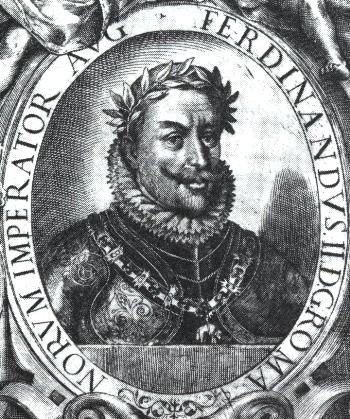
Ferdinand II, Emperor of Rome and the German Reich
Born on 9 August 1578 in Graz
First marriage on 24 April 1600 in Graz to Maria Anna, Princess of Bavaria (*18.12.1574, +8.03.1616)
Second marriage on 2 February 1622 in Innsbruck to Eleonora, Princess of Mantua (*23.9.1598, +27.6.1655)
29.6.1617 in Prague (after the oath sworn to the Estates of Bohemia and Silesia) elected King of Bohemia and Silesia.
1.07.1618 crowned King of Hungary in Pressburg
9.09.1619 crowned Emperor of Rome and Germany in Frankfurt am Main
Died on 15 February 1637 in Vienna.
Seven children were born of the first marriage:
1 - Christina (1601-1601). 2 - Charles (1603-1603). 3 - Johann (1605-1619). 4 - Ferdinand IV (as the later Emperor Ferdinand III). 5 - Maria Anna (1610-1665). 6 - Cäcilia Renata (1611-1644), who on 13.9.1637 in Kraków married Władysław IV (Vasa), King of Poland 1632-1648. 7 - Leopold Wilhelm (1614-1662), from 1655 until his death Bishop of Wrocław.
The Prague uprising (1618), when the emperor's representatives were thrown out of the window, led to a corps of troops being sent from Opole “to protect religion”. The people of Opole, however, remained neutral and tried to act as mediators. They told the Protestants that they had to be content with practising their religion at home. Officially, from a political point of view, they condemned the Protestants, but from a religious one they favoured them. Protestant townspeople in Opole tried to use force, especially during funeral rites according to the Lutheran ritual. There were scuffles and cemetery gates were broken down, and the funeral ceremony took place under the protection of musketeers. When news of the victories of Ferdinand II and the rout of the Protestants in Bohemia reached the Opole starostwo, all practices of the new religion were most strictly forbidden.
The Prague uprising ended in great defeat for the Czechs. “White Mountain in Bohemia” (8.11.1620): there, before the Thirty Years' War flared up, a little war took place between the Protestant Union (22 thousand troops) and the Catholic League (28 thousand troops), who had earlier concluded a non-aggression pact (at Ulm), but only for the territory of the German Reich. Bohemia was not the Reich, so the treaty was not broken. The leaders who failed to escape were executed and their property confiscated. 30 000 families were expelled from the country, and large estates (about 650) were confiscated from supporters. Princes and counts who had served the Habsburg court but favoured the Protestants were forced to leave the country. It seemed this was the end for the Protestants, but it was only the beginning.
Emperor Ferdinand II found the support of Pope Paul V, King Philip III of Spain and the Catholic League in Bavaria, on which he was strongly dependent militarily. But the Protestants also had their support. The Union founded earlier had the support of the King of Sweden, Gustav II Adolf, and the King of Denmark, Christian IV. And so began the Great War between the Catholic League and the Protestant Union, which lasted 30 years.
In the first years Ferdinand won great victories. On 10 May 1627 new organisational directives were issued for Bohemia, Moravia and Silesia, which guaranteed the right of inheritance for the Habsburg line, deprived the Estates in Bohemia, Moravia and Silesia of rights in future royal elections, and moved the emperor's chancellery definitively to Vienna.
In 1629 he issued an edict stating that all property (estates, churches, monasteries, foundations, bishoprics) taken from the Catholics by the Protestants since 1552 was to be returned immediately.
To carry out the edict, Emperor Ferdinand II engaged the Bohemian nobleman Albrecht Wallenstein, of whom much more will be heard in Silesia. Brought up in a poor Protestant family, he converted to Catholicism only in 1606. He also took an active part in the Battle of White Mountain, where he distinguished himself, and then “bought with the right of inheritance” property confiscated from the Protestants. In 1623 he was raised to the rank of prince of the German Reich. When the Thirty Years' War gathered momentum, Wallenstein, with the emperor's consent and support, had under his command a great army which also reached our Opole, and in the Prószków chronicle we read of the great devastation done in Prószków.
What's new in our Folwark?
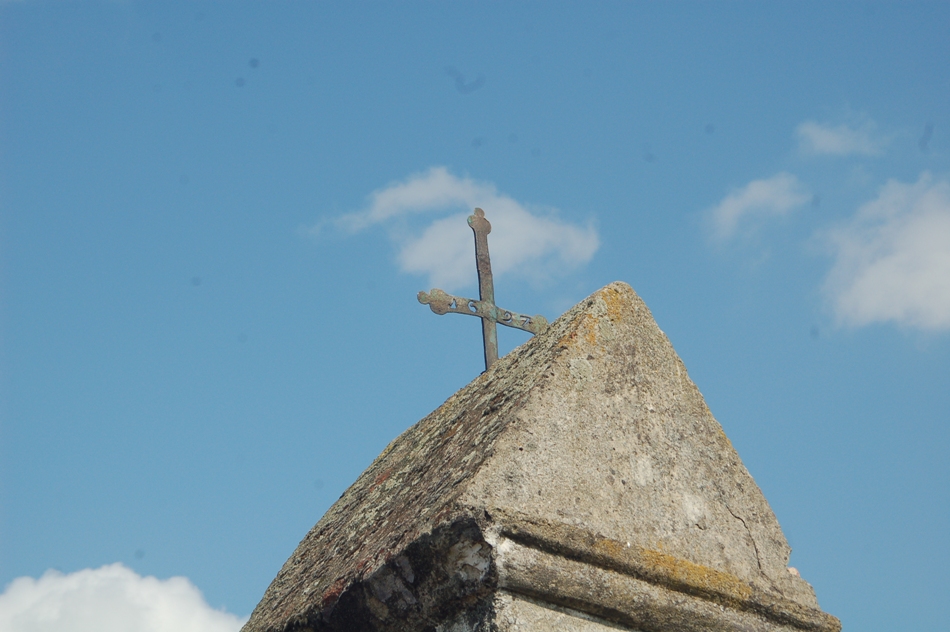
Beside the road from the Duchy of Racibórz to Opole, on the Jajsiowe field, a chapel was built in 1627 that we can still see today. There are many legends about it. I shall add another.
When you read what horrors befell the Bohemian Protestants, and what our Protestants in Opole were exposed to, does not this answer suggest itself:
We Folwarczanie are Catholics.
The marching troops, hunting Protestants along their way, had a visible sign.
We need not stop here, Catholics live here!?
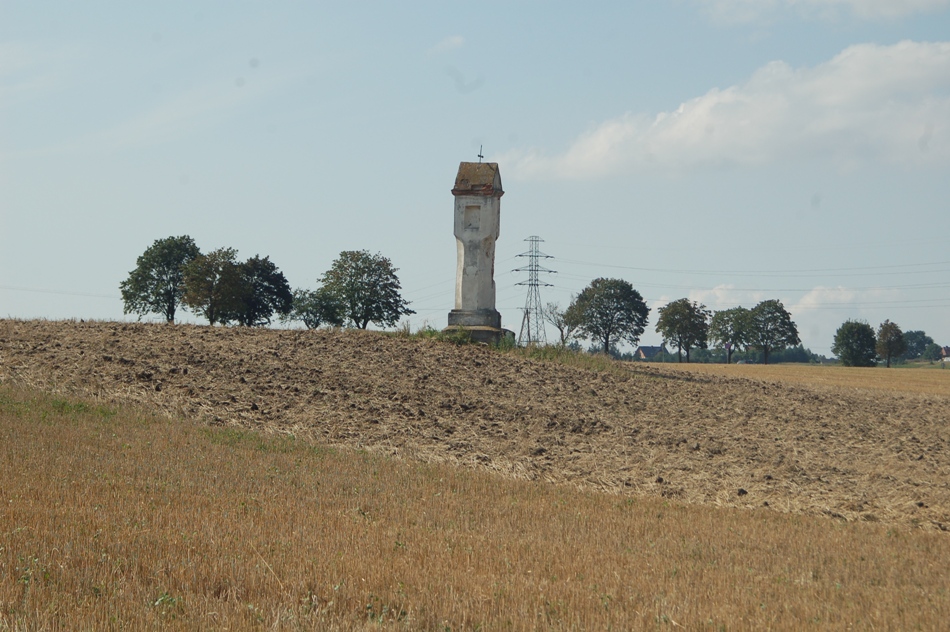
Our oldest building in Folwark, 1627. For 10 years wars of religion have been going on in the Habsburg state, to which our Folwark also belongs
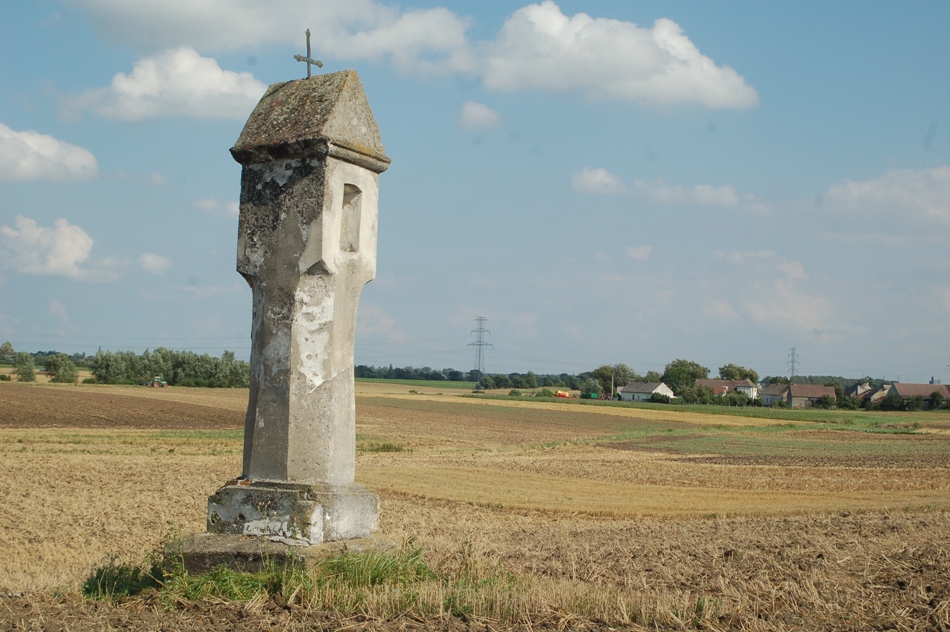
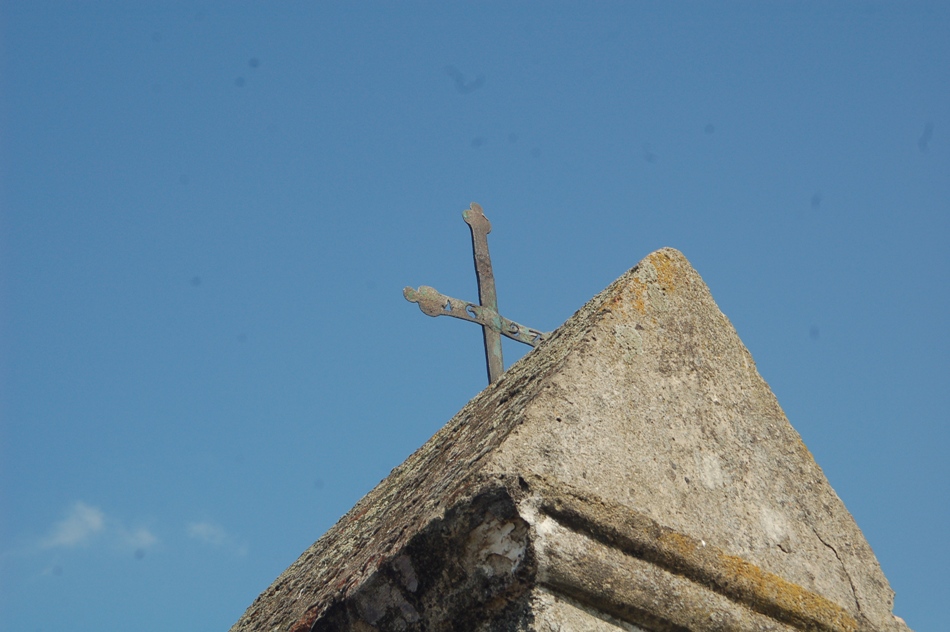
The date can be clearly read!
More next time.
Greetings from Folwark, Rudolf