

The 18 parts
- Part IPofyrtane dzieje FolwarkuA short history of Silesia, Opole and Folwark through the ages. From the Celts and Germanic peoples and late Roman times to the Migration Period. The first Slavs in Europe. Silesia from Mieszko I to Władysław II “Wygnaniec”.
- Part IIFrom the “Testament” of Bolesław “Krzywousty” in 1138 until Opole ceased to be a village and the town began
- Part IIIFrom “Wygnaniec” to Bolko I of Opole
- Part IVThe beginnings of settlement under German law
- Part VThe first record of the inhabitants of Folwark, 1566!
- Part VIAll about the “first known Folwarczanie”
- Part VIIThe first Habsburgs in Opole
- Part VIIIAbout our emperors
- Part IXBad times are coming
- Part XThe bad times have come
- Part XIWallenstein and Mansfeld in Oppeln
- Part XIIThe end of the Thirty Years' War
- Part XIIIReturn to the Habsburgs
- Part XIVMolitory, Scholtze, Tabernatory and others in our parish
- Part XVEmperor Charles VI, the last Habsburg, and at the end puzzles in Gothic script
- Part XVIEmpress Maria Theresa and Frederick II the Great
- Part XVIIFrederick II the Great - “The Folwarczanie became Prussians”
- Part XVIIIA new war (the Seven Years' War)(page under construction)
The oldest find in our Folwark
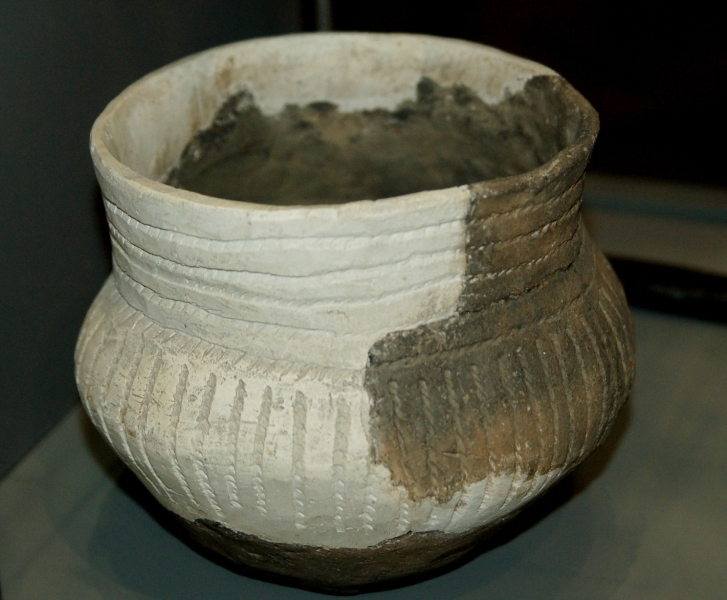
4. Archaeological site in Chrzowice. From the period 4500-1700 BC. Area 90-37, site 81. Sand pit on Wiktor Gielnik's field. During sand extraction settlement traces from the period of the “Corded Ware – Neolithic” culture were discovered. In July 1961 a pot was found, 12 cm high, rim diameter 11 cm, base diameter 7 cm. It is listed in the register as “Decorated vessel”. It was handed over to the Muzeum Śląska Opolskiego by Stanisław Kornek. (Stanik Jakubów)